[English Version below] Ein Film (oder auch ein Foto) erzählt eine Geschichte. Zumindest sollten beide Genres dies tun, wenn damit ein gewisser Anspruch verbunden wird. Oft wird dies so aufgefasst, als ob damit immer irgendeine Handlung verbunden sein müsste, wie es in den tausenden von Anleitungen über „Storytelling“ als Regel gefordert wird. David DuChemin, der begnadete Fotolehrer aus Vancouver, macht in seinem Buch „Die Seele der Kamera“ darauf aufmerksam, dass dies nicht gemeint sein kann. Es geht bei der Forderung nach einer Geschichte im Bild nicht um das vordergründige „Was geschieht?“, sondern um das Thema, um die Frage „Wovon handelt das Bild, der Film?“ Das ist ein großer Unterschied.
Schauen wir uns einfach mal als Beispiel einen Roman an und stellen uns eine Unterhaltung darüber vor. Wir werden einem Freund, dem wir darüber erzählen, wohl eher nicht die Handlung des Buchs mehr oder weniger ausführlich wiedergeben wollen, sondern sagen, dass die Geschichte beispielsweise vom Versuch eines Menschen handelt, sich in der Welt zurechtzufinden. Noch prägnanter wird es, wenn wir Lyrik als Vergleich heranziehen. Oft haben Gedichte ja keine stringente Handlung, aber sehr wohl ein Thema und erzählen damit eine Geschichte.
In diesem Sinn sehe ich meine kleine Fotoreihe „Ranunkel“:
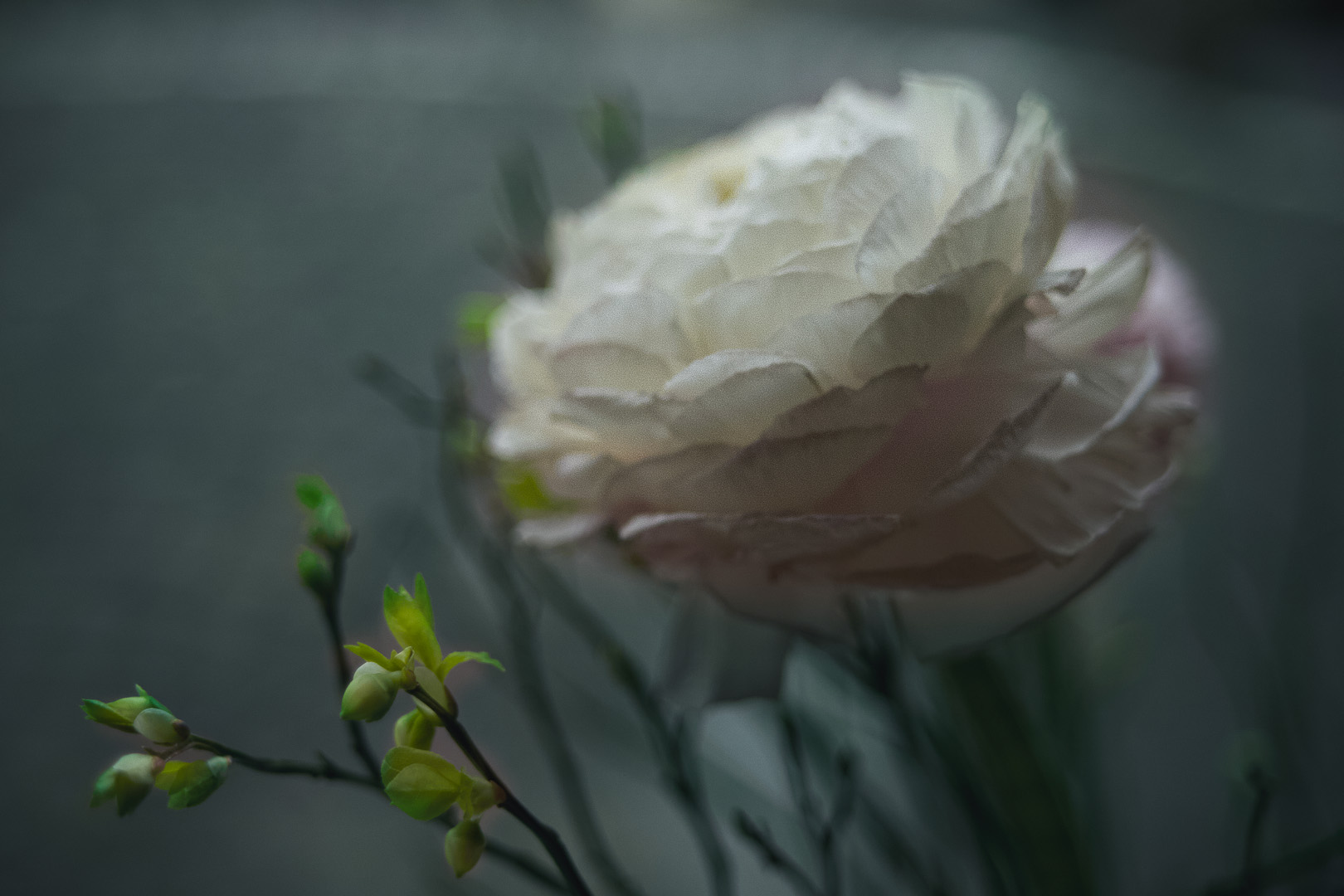
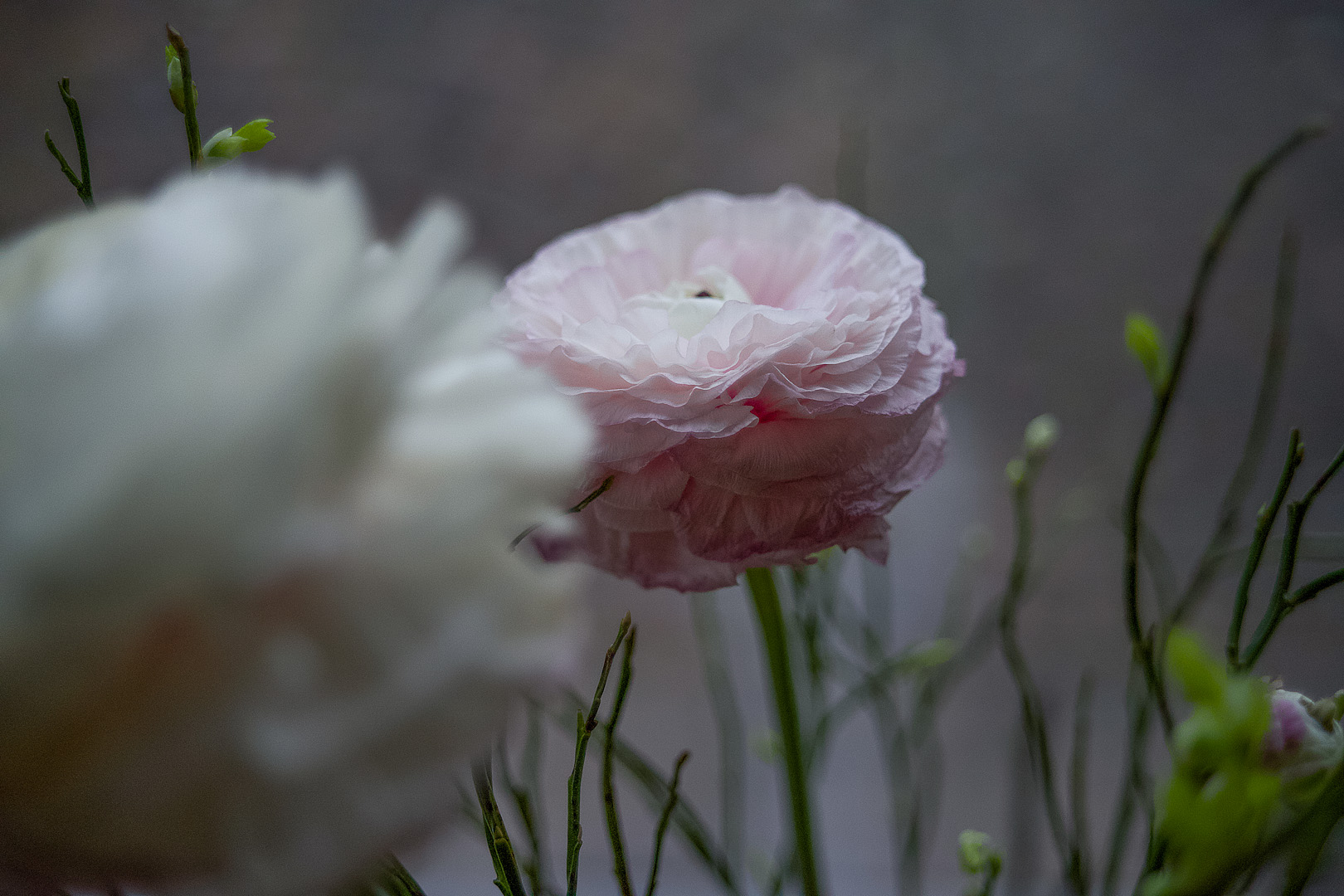
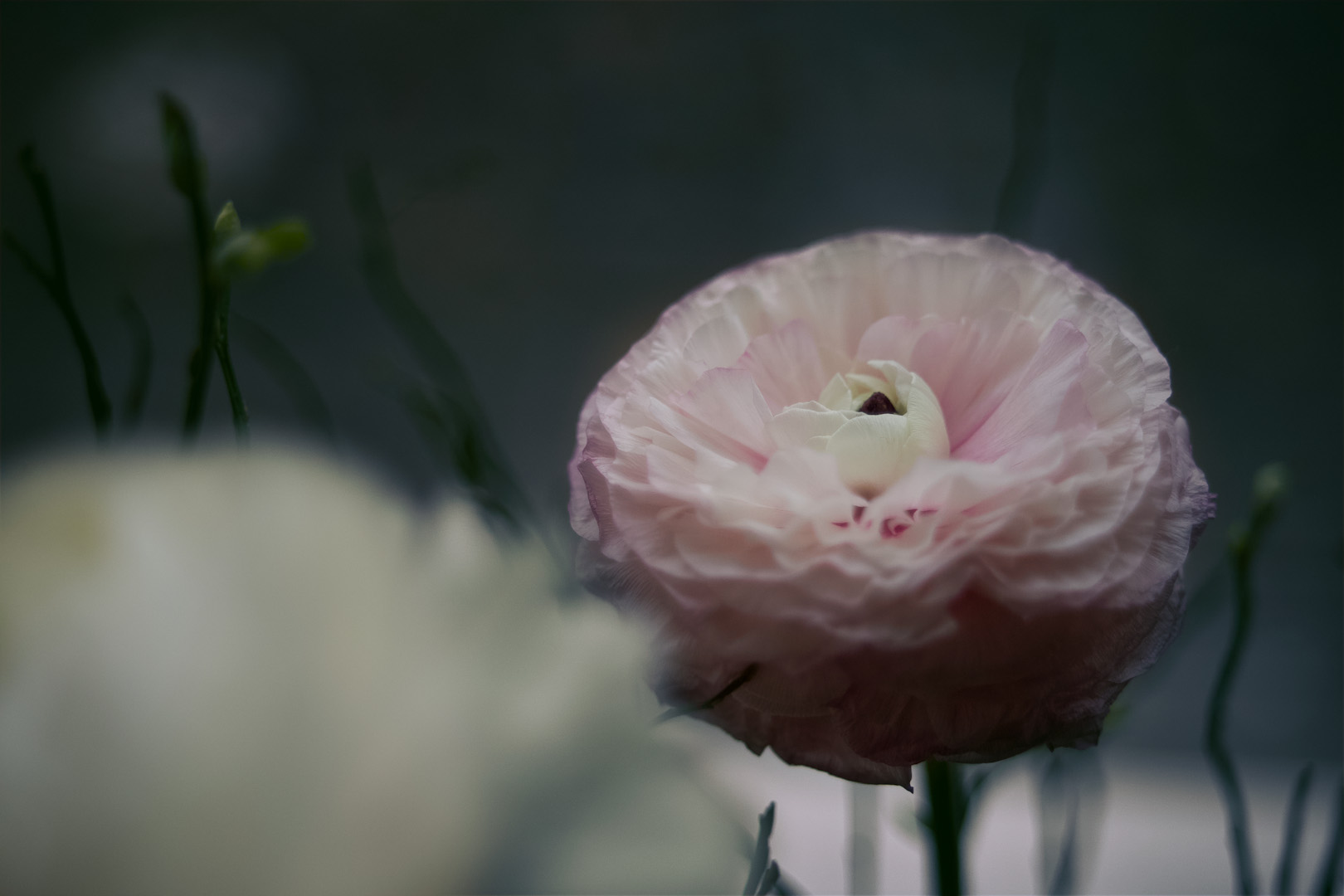
Die Fotos erzählen keine Handlung, aber sehr wohl eine Geschichte: Das uralte Geschehen vom Werden und Vergehen. Der Ranunkelstrauß ist nicht mehr frisch, sondern die Blüten stehen schon am Rande des Verwelkens. Und trotzdem zeugen sie noch von der Schönheit auf dem Höhepunkt ihrer Blütezeit.
Und damit kommen wir zum Ausgangspunkt zurück. Tatsächlich erzählen die Bilder eine Geschichte. Nur nicht in dem Sinne, was heute oft unter „Storytelling“ verstanden wird und sich auf eine Aktion bezieht. Diese Bilder handeln von der großen Erzählung vom Werden und Vergehen aller Dinge.
Of Becoming and Passing
A film (or a photograph) tells a story. At least, both genres should do so if they have a certain aspiration. This is often interpreted as if it always has to involve some kind of plot, as is demanded as a rule in the thousands of „storytelling“ guides. David DuChemin, the gifted photography teacher from Vancouver, points out in his book „The Soul of the Camera“ that this cannot be the case. The demand for a story in the image is not about the superficial „What is happening?“ but about the subject matter, about the question „What is the image, the film, about?“ There’s a big difference.
Let’s just look at a novel as an example and imagine a conversation about it. We’re probably not going to want to recount the plot of the book in more or less detail to a friend we’re telling about it, but rather say that the story is about, say, a person’s attempt to find their way in the world. It becomes even more striking when we use poetry as a comparison. Poems often don’t have a coherent plot, but they do have a theme and thus tell a story.
It’s in this sense that I see my small photo series „Ranunculus“:
The photos don’t tell a plot, but they do tell a story: the ancient process of becoming and passing away. The bouquet of ranunculus is no longer fresh; the blossoms are already on the verge of wilting. And yet they still bear witness to their beauty at the height of their bloom.
And that brings us back to the starting point. The images do indeed tell a story. Just not in the sense that is often understood today as „storytelling,“ which refers to an action. These images are about the grand narrative of the coming-to-be and passing-away of all things.
 Walter Korinek: Bewegtbild, Fotografie, Text